
We have seen two recent significant scab and rust infection periods: May 16-17 (22 hr wet at 74-71° with 0.77 in. rain) and May 18-19, 16 hr at 72-64° with 0.88 in. of rain.These are important for secondary scab infection where primary infection was not well-controlled earlier and, at temperatures in the 70s and higher 60s, also could signal some early Glomerella leaf spot and bitter rot activity. Cedar-apple rust galls are still actively producing spores.
We have had 22 dry weather powdery mildew
infection days since mildew
spores were first available Apr 6.
Yesterday we had reports of fire blight symptoms in the region, probably from infection that occurred May 5-7, which Maryblyt predicted to appear May 11-14.
Showing posts with label scab. Show all posts
Showing posts with label scab. Show all posts
Tuesday, May 19, 2015
Saturday, October 18, 2014
Some late season disease pressures

After enjoying some good harvest weather in September, with only 0.4 inches of rain in the Winchester area, the past two weeks have brought some significant late season disease pressures, but also with much needed rainfall. Extended wetting events occurred last week October 10-11 (27 hours at 55° with 0.4 inches of rain). This week we had an extended wetting period of more than 60 hours with only intermittent drying Oct 14-17. Much of this was at relatively warm temperatures favorable for rots, including 9 hours at 71°.
The most recent extended wetting, our longest since late April, also favored fruit scab infection wherever active scab was present in the orchard as a result of poor coverage or missed applications or fungicide resistance early in the season. Rainfall Oct 14-17 totaled more than 2.3 inches and likely depleted fungicide residue, even from applications in the past two weeks. This extended wetting at favorable temperatures was enough to cause "pin-point scab" (storage scab) of late cultivars, and early marketing (rather than long-term storage) is suggested for fruit from fresh-market orchards lacking recent fungicide protection where there was earlier evidence of active scab.

Wednesday, May 14, 2014
Fire blight update; scab and rust infection
The observations, conditions, and recommendations reported for Winchester, VA are provided as a guide to fire blight risk assessment for the area of the Virginia Tech AREC located six miles southwest of Winchester. At our AREC there is still a lot of susceptible bloom on late blooming cultivars such as Rome.
FIRE BLIGHT ALERT: The risk column of Maryblyt 7 graphic below, based on predicted temperatures and wetting for May 14-18, shows that fire blight risk will remain extremely high through Friday, May 16 wherever bloom is present. In high-risk situations, a protective streptomycin application is recommended ahead of predicted infection conditions. In the event of hail injury or other trauma blight situation, apply streptomycin as soon as possible after the event. Routine spray applications can provide enough wetting to meet the wetting requirement for infection if all other infection conditions have been met and this would have been true for May 11-12. Under the warm temperature conditions shown for the this week, streptomycin remains residually effective for only about 3 days.
With this fire blight pressure, you still might want to consider applying the plant growth regulator, Apogee to suppress shoot blight if hail or another trauma blight event were to occur. Optimum timing of the first Apogee application for this purpose is at petal fall on king bloom, and a suppressive effect should not be expected until 7-10 after Apogee application.
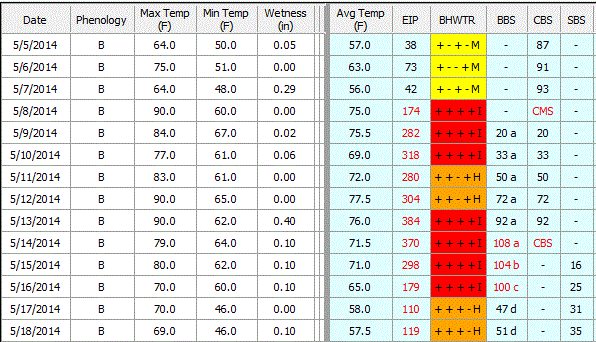
The temperature and rainfall data are current through Wednesday morning, May 14, for the graphic above from the Maryblyt 7 program. Predicted weather conditions are shown for May 12-16. The components of fire blight risk are indicated in the columns labeled B (blossoms open), H (degree hours for epiphytic bacterial population buildup, EIP >100), W (wetting by rain or dew), and T (average daily temperature 60 F or above).
The BBS column is tracking predicted appearance of blossom blight symptoms from infection May 8 to predicted symptom appearance (108a) May 14. The CBS column at the right in the graphic indicates progression toward the appearance of canker blight symptoms on new growth, due to extension of overwintering cankers from last year, with canker margin symptoms (CMS) by May 8 and canker blight symptoms May 14. Canker advancement cannot be prevented by a chemical treatment, and the presence of symptoms will indicate a build-up of inoculum which could become a factor in the event of a trauma blight situation due to hail injury, etc. The weather conditions used in the predictive part of this graphic come from the Weather Channel for Winchester, supplemented by site-specific data from SkyBit Inc.
SCAB and RUSTS: An apple scab and rust infection period is in progress, with more than 14 hr of wetting and temperatures in the mid-60s. Much cedar-apple and quince rust inoculum is still available and many small unprotected fruits are still susceptible. We are now into a heavy secondary scab situation where scab was not adequately controlled on Apr 11-12, Apr 14-15, or Apr 28-May 1. This wetting period also favors infection by peach scab.
FIRE BLIGHT ALERT: The risk column of Maryblyt 7 graphic below, based on predicted temperatures and wetting for May 14-18, shows that fire blight risk will remain extremely high through Friday, May 16 wherever bloom is present. In high-risk situations, a protective streptomycin application is recommended ahead of predicted infection conditions. In the event of hail injury or other trauma blight situation, apply streptomycin as soon as possible after the event. Routine spray applications can provide enough wetting to meet the wetting requirement for infection if all other infection conditions have been met and this would have been true for May 11-12. Under the warm temperature conditions shown for the this week, streptomycin remains residually effective for only about 3 days.
With this fire blight pressure, you still might want to consider applying the plant growth regulator, Apogee to suppress shoot blight if hail or another trauma blight event were to occur. Optimum timing of the first Apogee application for this purpose is at petal fall on king bloom, and a suppressive effect should not be expected until 7-10 after Apogee application.
The temperature and rainfall data are current through Wednesday morning, May 14, for the graphic above from the Maryblyt 7 program. Predicted weather conditions are shown for May 12-16. The components of fire blight risk are indicated in the columns labeled B (blossoms open), H (degree hours for epiphytic bacterial population buildup, EIP >100), W (wetting by rain or dew), and T (average daily temperature 60 F or above).
The BBS column is tracking predicted appearance of blossom blight symptoms from infection May 8 to predicted symptom appearance (108a) May 14. The CBS column at the right in the graphic indicates progression toward the appearance of canker blight symptoms on new growth, due to extension of overwintering cankers from last year, with canker margin symptoms (CMS) by May 8 and canker blight symptoms May 14. Canker advancement cannot be prevented by a chemical treatment, and the presence of symptoms will indicate a build-up of inoculum which could become a factor in the event of a trauma blight situation due to hail injury, etc. The weather conditions used in the predictive part of this graphic come from the Weather Channel for Winchester, supplemented by site-specific data from SkyBit Inc.
SCAB and RUSTS: An apple scab and rust infection period is in progress, with more than 14 hr of wetting and temperatures in the mid-60s. Much cedar-apple and quince rust inoculum is still available and many small unprotected fruits are still susceptible. We are now into a heavy secondary scab situation where scab was not adequately controlled on Apr 11-12, Apr 14-15, or Apr 28-May 1. This wetting period also favors infection by peach scab.
Sunday, April 13, 2014
Scab infection at Winchester Apr 11-12
At our AREC near Winchester, wetting which began at 6 PM Apr 11 and continued for 14 hours at 64-40° F was long enough for a scab infection period. Total rainfall during the infection period was only 0.01 inch.
Wetting during this event was not long enough for scab infection at Tyro, Apr 11-12.
Wetting during this event was not long enough for scab infection at Tyro, Apr 11-12.
Tuesday, April 8, 2014
Wetting April 7-8 Winchester and Tyro, VA
Apple buds at our AREC are now at 1/2-inch green-tip stage with some approaching tight cluster.
With wetting starting at 6 AM yesterday, and starting to dry as of 8 AM this morning, we did not have enough wetting for a scab infection at 38-44° F.
Wetting in the Tyro area, central Virginia, began at 4 AM Apr 7 and continued for more than 26 hours at 42-47° F with 1.25 inch rain. This was more than adequate for a scab infection period. Tyro also was close to an infection period Apr 3-4 with 11 hr wet with light rain and temperatures 51-59° F.
Expect the release of powdery mildew conidia as buds approach the tight cluster stage.
With wetting starting at 6 AM yesterday, and starting to dry as of 8 AM this morning, we did not have enough wetting for a scab infection at 38-44° F.
Wetting in the Tyro area, central Virginia, began at 4 AM Apr 7 and continued for more than 26 hours at 42-47° F with 1.25 inch rain. This was more than adequate for a scab infection period. Tyro also was close to an infection period Apr 3-4 with 11 hr wet with light rain and temperatures 51-59° F.
Expect the release of powdery mildew conidia as buds approach the tight cluster stage.
Monday, March 31, 2014
At last, it's a new season!

On Monday, March 31, we saw our first green-tip stage showing on Gala (above) and Red Delicious apples, and that raises the question whether wetting March 29-30 was enough for a scab infection period.
At our AREC, we had just enough wetting (18 hr wet at 48-40° F, with 0.54 inch of rain), and we did trap scab ascospores, but probably had very little green tissue exposed during the wetting period.
This year, we will be tracking and reporting disease update information based on data we are receiving from weather stations placed in Silver Creek Orchards, Pharsalia Road in Tyro, Nelson County, Virginia. Green tip was also reported on Pink Lady apples in that area. There was considerably more wetting in Tyro than at Winchester, easily long enough for scab infection: 26 hr wet at 57-48° F, then 3 hr dry, followed by 7 more hours wet at 34-44°, with a total of 1.72 inch of rain. There was probably enough green tissue exposed during the wetting, so the only question is whether scab ascospores were present and mature for the wetting event. Wherever there was scab present in the orchard or on nearby untended trees in fall 2013, spores were likely mature and available to infect.
Where apples are just beginning to show green-tip, it is definitely time for protective fungicides such as copper or EBDCs; however, if green tissue was exposed during this potential infection event, it would be prudent to include a fungicide with after-infection activity with the protectant if this is the first fungicide application. We have found Vangard (cyprodinil) to be compatible with copper, and effective in such situations. Because of fruit russet concerns, copper materials should not be applied to fresh market fruit after 1/4-inch green-tip stage.
We thank Dr. Mizuho Nita, grape pathologist with Alson H. Smith AREC, Winchester, for procuring funding and placing the weather stations in Tyro. We also thank John Saunders, Silver Creek Orchards, for hosting these weather stations and helping us to install them. As the season progresses, we hope to compare accumulated wetting, temperature, and infection conditions within adjacent grape and apple leaf canopies at three elevations from approximately 944-1462 ft. Dr. Nita's funding came from a VDACS SCRI block grant (Virginia Dept. of Agriculture and Consumer Services, Specialty Crop Research Initiative).
Wednesday, June 13, 2012
Extended wetting and validation of the sooty blotch flyspeck wetting hour threshold
Extended wetting
June 11-13 involved two combined wetting periods of 14 hours at 69° and 12 hours at 66° with a total of 1.4 in. rain. These wetting periods favored secondary scab and
all summer diseases on apples and brown rot on ripening stone
fruits. Accumulated wetting hour total from rainfall or dew since Apr 18 is now at 367 hours.
Because of early bloom and petal fall this year, there had been some questions about using the Apr 8 petal fall date as the trigger for accumulating wetting hours, starting 10 days later. The 250 accumulated wetting hour threshold is used to predict the presence of sooty blotch/flyspeck (SBFS) fungi on unprotected fruit. Using the Apr 18 date we had passed the 250-wetting hour threshold by May 25, four weeks ahead of last year and the second earliest date for reaching this predictive threshold on record since 1994. We are now seeing SBFS on fruit samples collected at our AREC three weeks ago and incubated under high humidity since then. This indicates that fungi were present May 25 and confirms the validity of the Apr 8 petal fall date and Apr 18 as the accumulation date in spite of this year's early bloom and petal fall dates.
Because of early bloom and petal fall this year, there had been some questions about using the Apr 8 petal fall date as the trigger for accumulating wetting hours, starting 10 days later. The 250 accumulated wetting hour threshold is used to predict the presence of sooty blotch/flyspeck (SBFS) fungi on unprotected fruit. Using the Apr 18 date we had passed the 250-wetting hour threshold by May 25, four weeks ahead of last year and the second earliest date for reaching this predictive threshold on record since 1994. We are now seeing SBFS on fruit samples collected at our AREC three weeks ago and incubated under high humidity since then. This indicates that fungi were present May 25 and confirms the validity of the Apr 8 petal fall date and Apr 18 as the accumulation date in spite of this year's early bloom and petal fall dates.
Friday, May 25, 2012
Extended wetting May 24-25
Last night's extended wetting came to 15 hours with 60-70° temperatures and 0.06 in. rain. This wetting favored scab and all summer diseases on apples and brown rot on ripening cherries and other stone fruits.
Monday, May 16, 2011
Weekend scab and rust infection periods
We recorded three scab and cedar-apple rust infection periods since Friday evening, May 13 (actually each of the last four nights): May 13-14 (14 hr, 63°), May 14-15 (14 hr, 63°), and May 15-16 (17 hr, 64-56°). Total rainfall for these three infection periods was 1.2". All of these were favorable for cedar-apple rust on foliage and rust inoculum is still available. Most fruit were no longer susceptible to quince rust. These four consecutive infection periods pose a serious secondary scab threat and, because of the difficulty maintaining good spray coverage earlier, it will be important to scout orchards carefully for scab the next week or two to ensure clean fruit.
Since May 8 we now have accumulated 55 hr toward the 250 wetting hour threshold for specific treatment against the sooty blotch and flyspeck fungal complex.
Since May 8 we now have accumulated 55 hr toward the 250 wetting hour threshold for specific treatment against the sooty blotch and flyspeck fungal complex.
Wednesday, May 4, 2011
Scab, rusts and fire blight update, May 4.
An apple scab and rust infection period occurred last night; 16-hr wetting at 75-42° F, with 0.4 inch rainfall. Fruit infection by quince rust and cedar-apple rust was observed today at our AREC likely from infection that occurred Apr 16.
CAUTION: The observations, conditions, and recommendations reported for Winchester, VA are provided as a guide to fire blight risk assessment only for the immediate area of the Virginia Tech AREC located six miles southwest of Winchester. Use of the information reported here for making orchard management decisions outside of that area is not our intent. Fruit producers outside of that area are encouraged to consult their state extension specialists for information similar to that provided here.

FIRE BLIGHT: Above is a cropped graphic from the Maryblyt 7 program. Most apple cultivars have reached petal fall but still with scattered bloom, and others, such as Yorks and Romes, are still have a lot of susceptible bloom. The temperature and wetting data are current through Wednesday morning, May 4. Predicted weather conditions are shown for May 4-8. The components of fire blight risk are indicated in the columns labeled B (blossoms open), H (degree hours for epiphytic bacterial populations), W (wetting by rain or dew), and T (average daily temperature 60 F or above). Based on predicted temperatures and wetting, the risk column shows that fire blight infection could have occurred as predicted, May 3 (note red color in BHWTR column) and could also occur with slightly warmer than predicted temperatures and wetting May 5. Be aware that wetting can occur with a fruit thinning application. Streptomycin should be included in such applications if all infection criteria are met except wetting. For infection to be predicted, wetting must occur after the EIP (epiphytic infection potential) reaches 100 or higher. With five consecutive days possible for infection Apr 24-28, we have seen the most sustained fire blight pressure since 2004, and some infection will be expected in commercial orchards. In high-risk situations, a protective streptomycin application is recommended ahead of predicted infection.
The BBS and CBS columns are tracking predicted blossom blight symptom (from infection Apr 11 and later ones as a-e) and canker blight symptom appearance, respectively. The column labeled SBS is tracking the appearance of shoot blight symptoms. Some early blossom cluster symptoms might be starting to appear in orchards. We are now seeing blossom symptoms from experimental inoculations done at our AREC Apr 23. Flower cluster infection was reported yesterday in central Virginia. With this year’s disease pressure, you may want to consider applying the plant growth regulator, Apogee as a shoot blight suppressant. Optimum timing of the first Apogee application for this purpose is at petal fall on king bloom, and a suppressive effect would not be expected until 7-10 after Apogee application. Growers are advised to be alert to changes in forecasts on a day to day basis and protect high-risk blocks through late bloom as needed. This Maryblyt graphic will be updated May 6. The weather conditions used in the predictive part of this graphic come from the Weather Channel for Winchester, supplemented by site-specific data from SkyBit Inc.
CAUTION: The observations, conditions, and recommendations reported for Winchester, VA are provided as a guide to fire blight risk assessment only for the immediate area of the Virginia Tech AREC located six miles southwest of Winchester. Use of the information reported here for making orchard management decisions outside of that area is not our intent. Fruit producers outside of that area are encouraged to consult their state extension specialists for information similar to that provided here.

The BBS and CBS columns are tracking predicted blossom blight symptom (from infection Apr 11 and later ones as a-e) and canker blight symptom appearance, respectively. The column labeled SBS is tracking the appearance of shoot blight symptoms. Some early blossom cluster symptoms might be starting to appear in orchards. We are now seeing blossom symptoms from experimental inoculations done at our AREC Apr 23. Flower cluster infection was reported yesterday in central Virginia. With this year’s disease pressure, you may want to consider applying the plant growth regulator, Apogee as a shoot blight suppressant. Optimum timing of the first Apogee application for this purpose is at petal fall on king bloom, and a suppressive effect would not be expected until 7-10 after Apogee application. Growers are advised to be alert to changes in forecasts on a day to day basis and protect high-risk blocks through late bloom as needed. This Maryblyt graphic will be updated May 6. The weather conditions used in the predictive part of this graphic come from the Weather Channel for Winchester, supplemented by site-specific data from SkyBit Inc.
Tuesday, May 3, 2011
Fungal disease update
Sixteen hours of intermittent wetting May 1-2 favored primary and secondary apple scab infection of leaves and fruit, quince rust fruit infection on cultivars in bloom and cedar-apple rust on foliage of all susceptible cultivars. Because a lot of rust inoculum was still available for infection during this wetting, it would be prudent to include an SI fungicide for after-infection rust control in applications this week. On stone fruits, these weather conditions were also favorable for peach scab and cherry leaf spot infection.
Since primary apple powdery mildew inoculum was first observed March 23, 13 dry-weather days have been favorable for mildew infection. Although this is fewer mildew days than we had to this point last year, secondary mildew lesions will become apparent on new growth in affected blocks.
Since primary apple powdery mildew inoculum was first observed March 23, 13 dry-weather days have been favorable for mildew infection. Although this is fewer mildew days than we had to this point last year, secondary mildew lesions will become apparent on new growth in affected blocks.
Thursday, April 28, 2011
Fungal disease and fire blight update
Primary apple scab lesions were observed today on unprotected trees at our AREC. Size and positions of infected leaves and appearance of lesions suggest that some could have been from infection Mar 30-Apr 1 and some from Apr 8-9. It is likely that they were present during infection periods Apr 22-23 and Apr 24-25 and, as such, could have provided secondary inoculum for heavy fruit infection in poorly protected orchards. Last night's wetting with 1.7 inches of rain was not quite long enough for scab or rust infection, but the 11-hr wetting event at 60-69° F Apr 24-25 favored quince rust of blossoms and cedar-apple rust infection of leaves and fruit, as well as scab. Quince and rust gall inoculum is still available on the cedar trees in our area.
Since primary powdery mildew inoculum was first observed Mar 23, eleven dry weather days have been favorable for mildew infection.
FIRE BLIGHT CAUTION: The observations, conditions, and recommendations reported for Winchester, VA are provided as a guide to fire blight risk assessment only for the immediate area of the Virginia Tech AREC located six miles southwest of Winchester. Use of the information reported here for making orchard management decisions outside of that area is not our intent. Fruit producers outside of that area are encouraged to consult their state extension specialists for information similar to that provided here.

FIRE BLIGHT: Above is a cropped graphic from the Maryblyt 7 program. Some apple trees have reached petal fall but others still have much bloom still open and susceptible. Late cultivars such as Rome and York may be near full bloom. The temperature and wetting data are current through Thursday morning, April 28. Predicted weather conditions are shown for April 28-May 2. The components of fire blight risk are indicated in the columns labeled B (blossoms open), H (degree hours for epiphytic bacterial populations), W (wetting by rain or dew), and T (average daily temperature 60 F or above). Based on predicted temperatures and wetting, the risk column shows that fire blight infection is possible with rainfall today, Apr 28 (note red color) and would again be possible if wetting were to occur Apr 29-30. For infection to be predicted, wetting must occur after the EIP (epiphytic infection potential) reaches 100 or higher. This year’s bloom season has seen considerable sustained fire blight pressure and some infection will be expected in commercial orchards. In high-risk situations, a protective streptomycin application is recommended ahead of predicted infection. The BBS and CBS columns are tracking predicted blossom blight symptom (from infection Apr 11 and later ones as a, c and d) and canker blight symptom appearance, respectively. Numbers in these columns represent percent of required degree hours for early blossom symptom appearance and canker margin symptoms Apr 26. Today, early symptoms are evident from experimental inoculations done Apr 23. Today’s update was a result of changes in the weather forecast from yesterday. RISKS CAN INCREASE QUICKLY WITH WETTING FOLLOWING WARMER THAN PREDICTED TEMPERATURES. Growers are advised to be alert to changes in forecasts on a day to day basis and protect high-risk blocks through late bloom as needed. This graphic will not be updated until May 2 unless some significant change warrants it. The weather conditions used in the predictive part of this graphic come from the Weather Channel for Winchester, supplemented by site-specific data from SkyBit Inc.
Since primary powdery mildew inoculum was first observed Mar 23, eleven dry weather days have been favorable for mildew infection.
FIRE BLIGHT CAUTION: The observations, conditions, and recommendations reported for Winchester, VA are provided as a guide to fire blight risk assessment only for the immediate area of the Virginia Tech AREC located six miles southwest of Winchester. Use of the information reported here for making orchard management decisions outside of that area is not our intent. Fruit producers outside of that area are encouraged to consult their state extension specialists for information similar to that provided here.

FIRE BLIGHT: Above is a cropped graphic from the Maryblyt 7 program. Some apple trees have reached petal fall but others still have much bloom still open and susceptible. Late cultivars such as Rome and York may be near full bloom. The temperature and wetting data are current through Thursday morning, April 28. Predicted weather conditions are shown for April 28-May 2. The components of fire blight risk are indicated in the columns labeled B (blossoms open), H (degree hours for epiphytic bacterial populations), W (wetting by rain or dew), and T (average daily temperature 60 F or above). Based on predicted temperatures and wetting, the risk column shows that fire blight infection is possible with rainfall today, Apr 28 (note red color) and would again be possible if wetting were to occur Apr 29-30. For infection to be predicted, wetting must occur after the EIP (epiphytic infection potential) reaches 100 or higher. This year’s bloom season has seen considerable sustained fire blight pressure and some infection will be expected in commercial orchards. In high-risk situations, a protective streptomycin application is recommended ahead of predicted infection. The BBS and CBS columns are tracking predicted blossom blight symptom (from infection Apr 11 and later ones as a, c and d) and canker blight symptom appearance, respectively. Numbers in these columns represent percent of required degree hours for early blossom symptom appearance and canker margin symptoms Apr 26. Today, early symptoms are evident from experimental inoculations done Apr 23. Today’s update was a result of changes in the weather forecast from yesterday. RISKS CAN INCREASE QUICKLY WITH WETTING FOLLOWING WARMER THAN PREDICTED TEMPERATURES. Growers are advised to be alert to changes in forecasts on a day to day basis and protect high-risk blocks through late bloom as needed. This graphic will not be updated until May 2 unless some significant change warrants it. The weather conditions used in the predictive part of this graphic come from the Weather Channel for Winchester, supplemented by site-specific data from SkyBit Inc.
Saturday, April 23, 2011
Scab infection period Apr 22-23
Wet 25 hr at 42-46°, this would result in a serious secondary infection period where scab lesions are already present in trees that were not adequately protected during the first primary period Mar 30-Apr 1.
Wednesday, April 20, 2011
Fire blight update and scab infection, Apr. 20
CAUTION: The observations, conditions, and recommendations reported for Winchester, VA are provided as a guide to fire blight risk assessment only for the immediate area of the Virginia Tech AREC located six miles southwest of Winchester. Use of the information reported here for making orchard management decisions outside of that area is not our intent. Fruit producers outside of that area are encouraged to consult their state extension specialists for information similar to that provided here.

FIRE BLIGHT: Above is a cropped graphic from the Maryblyt 7 program. Earlier apple cultivars are approaching full bloom open, late ones have some bloom open, and more bloom will open over the several days. The temperature and rainfall data are current through Wednesday morning, April 20. Predicted weather conditions are shown for April 20-24. The components of fire blight risk are indicated in the columns labeled B (blossoms open), H (degree hours for epiphytic bacterial populations), W (wetting by rain or dew), and T (average daily temperature 60 F or above). Based on predicted temperatures and wetting, the risk column shows that fire blight infection is possible if it rains later today, Apr 20 (note red color). (UPDATE Apr 21: We did not have the wetting from rainfall required for fire blight infection at the AREC yesterday; however, on a day when all the other requirements are met, wetting by a spray application can initiate infection). For infection to be predicted, wetting must occur after the EIP (epiphytic infection potential) reaches 100 or higher. Following today’s potential infection, risk will subside with cooler temperatures but will again reach an infective level with rain Sunday, Apr 24. In high-risk situations, a protective streptomycin application is recommended ahead of predicted infection. An application today should protect for both of these high-risk periods. This graphic will be updated April 22, or sooner if significant change warrants it. The BBS and CBS columns are tracking predicted blossom blight symptom (from infection Apr 11) and canker blight symptom appearance, respectively. The numbers in these columns represent percent of required degree hours for symptom appearance. The weather conditions used in the predictive part of this graphic come from the Weather Channel for Winchester, supplemented by site-specific data from SkyBit Inc.
Length of wetting from 9 pm Apr 19- 8 am Apr 20 was just long enough for a scab infection period: 12 hr at 50-54F. There had been wetting earlier with 0.4 inches of rainfall on Apr 19 but that was not included because of 5-hr drying in the interim. Rusts, and especially quince rust, are still a threat, but rust-prone blocks covered with an SI fungicide would have been well-protected for this event.

FIRE BLIGHT: Above is a cropped graphic from the Maryblyt 7 program. Earlier apple cultivars are approaching full bloom open, late ones have some bloom open, and more bloom will open over the several days. The temperature and rainfall data are current through Wednesday morning, April 20. Predicted weather conditions are shown for April 20-24. The components of fire blight risk are indicated in the columns labeled B (blossoms open), H (degree hours for epiphytic bacterial populations), W (wetting by rain or dew), and T (average daily temperature 60 F or above). Based on predicted temperatures and wetting, the risk column shows that fire blight infection is possible if it rains later today, Apr 20 (note red color). (UPDATE Apr 21: We did not have the wetting from rainfall required for fire blight infection at the AREC yesterday; however, on a day when all the other requirements are met, wetting by a spray application can initiate infection). For infection to be predicted, wetting must occur after the EIP (epiphytic infection potential) reaches 100 or higher. Following today’s potential infection, risk will subside with cooler temperatures but will again reach an infective level with rain Sunday, Apr 24. In high-risk situations, a protective streptomycin application is recommended ahead of predicted infection. An application today should protect for both of these high-risk periods. This graphic will be updated April 22, or sooner if significant change warrants it. The BBS and CBS columns are tracking predicted blossom blight symptom (from infection Apr 11) and canker blight symptom appearance, respectively. The numbers in these columns represent percent of required degree hours for symptom appearance. The weather conditions used in the predictive part of this graphic come from the Weather Channel for Winchester, supplemented by site-specific data from SkyBit Inc.
Length of wetting from 9 pm Apr 19- 8 am Apr 20 was just long enough for a scab infection period: 12 hr at 50-54F. There had been wetting earlier with 0.4 inches of rainfall on Apr 19 but that was not included because of 5-hr drying in the interim. Rusts, and especially quince rust, are still a threat, but rust-prone blocks covered with an SI fungicide would have been well-protected for this event.
Sunday, April 17, 2011
Scab and rust infection period
An apple scab and possible cedar-apple and quince rust infection period was recorded with 20-hr wetting from 2 AM-10 PM Apr 16. Temperatures through the wetting period ranged from 47-58F at the AREC but were as much as 4 degrees warmer in Winchester. Blossoms are now highly susceptible to quince rust. The 1.8-in. rainfall would have depleted most of the residue of non-systemic protectant fungicides applied this week, but an SI fungicide applied Apr 14-15 would have controlled any rust infection that occurred in this wetting period as well as the one Apr 12-13.
Wednesday, April 13, 2011
Scab and rust infection period Apr 12-13
We recorded 27 hr wetting with 1.6 in of rainfall from 6 AM Apr 12- 9 AM Apr 13 with the first 10 hr at 53, then gradually dropping to 49. This wetting was plenty long for an apple scab infection period and likely also an infection period for cedar-apple and quince rusts although it was a bit on the cool side for rusts. Rust spores were discharged during this wetting and blossoms are now susceptible to quince rust which results in distorted fruit at harvest. Quince rust inoculum is produced by cankers (shown below) that can survive for many years, resulting in consistently high local inoculum levels from year to year (to year). Because an inch and a half of rainfall would have eroded most of EBDC residue applied this week before the rain, a follow-up application including an SI fungicide is suggested for after-infection control. Strobilurin (QoI) fungicides are notably weak for quince rust control.
The fire blight graphic will be updated tomorrow. Temperatures yesterday and today have been too cool for fire blight infection, although infection could have occurred as predicted with the rain early Tuesday morning on bloom that was open Monday.
 |
| Quince rust inoculum source, a perennial canker in red cedar. |
 |
 |
Sunday, April 10, 2011
Scab infection Apr 8-9.
A scab infection period was recorded at our AREC from 6 AM Apr 8-11 AM Apr 9. This included some intermittent wetting and temperatures ranging from 46-39F with approximately 0.3 in rainfall.
For the record, wetting at our AREC Apr 4-5 was not adequate for scab infection and few cedar-apple rust spores have been released to date.
For the record, wetting at our AREC Apr 4-5 was not adequate for scab infection and few cedar-apple rust spores have been released to date.
Saturday, April 2, 2011
Scab infection
A scab infection period was recorded with wetting from 3:30 PM Mar 30- 8 AM Apr 1. Intermittent wetting/drying occurred mid-day Mar 31 but it is likely that most local areas did not have enough drying to stop the infection process. This is the first scab infection period of the season at our AREC.
Wednesday, March 30, 2011
Can we get scab infection with snow?
The really unusual weather we've had so far this spring, and a forecast for who knows what the next two days or so, brings up the old question about whether it is possible to have an apple scab infection period with wetting by melting snow. The answer, of course is, yes it is. If there is enough wetting to initiate ascospore discharge and deposition on susceptible tissue in the tree, then prolonged wetting from melting snow (48 hr at near freezing temperatures) can result in infection. We saw it happen in 1990- a year that gave us three snows and 13 nights below freezing after green tip - and we still ended up with decent apple and peach crops. Logic says that if the snow blankets frozen ground before ascospore discharge, it would prevent discharge into the air, negating impaction of the ascospores in the tree and therefore would not result in infection.
Speaking of the wild weather this spring, without looking back, I don't recall a year when we had this much prolonged cold after green tip. So far, at the AREC, we see only a little damage of king bloom that was showing some color (a little bit beyond tight cluster) Sunday morning when the temperature dipped to 26. The coldest time seemed to come with the snow and there was probably air movement that brought cold to higher elevations in the orchard blocks that were more advanced than lower areas (a freeze rather than a frost). Once we get through this, hopefully the week or more of colder weather will be recognized as having been beneficial because it delayed bud and reduced susceptibility to later frosts.
Speaking of the wild weather this spring, without looking back, I don't recall a year when we had this much prolonged cold after green tip. So far, at the AREC, we see only a little damage of king bloom that was showing some color (a little bit beyond tight cluster) Sunday morning when the temperature dipped to 26. The coldest time seemed to come with the snow and there was probably air movement that brought cold to higher elevations in the orchard blocks that were more advanced than lower areas (a freeze rather than a frost). Once we get through this, hopefully the week or more of colder weather will be recognized as having been beneficial because it delayed bud and reduced susceptibility to later frosts.
Friday, March 25, 2011
Wetting March 23-24

At our AREC we recorded wetting from 7:15 PM Mar 23 - 10:30 AM Mar 24, about 85% of the duration of wetting required for scab infection at temperatures that ranged from 49F down to 37F. But temperatures and area showers were variable earlier on March 23 and some local areas may have had their first scab infection. Wetting occurred north of Winchester by 6 PM while the temperature was at 55F; other areas had showers near noon March 23 and may have remained wet longer. Scab protectants applied before this wetting probably weathered through the rainfall which totaled about half an inch. At our AREC, apple bud stage varies from 1/2"- green for York (shown above) and Rome to tight cluster for several cultivars including Gala, Red Delicious and Idared. Where no fungicides have been applied and length of wetting is marginal or in doubt, it would be prudent to include one with after-infection control in the first application. Also, consider that powdery mildew spores are now available for infection during dry weather 53F and higher, and cedar-apple rust gall spore horns are extended to more than a half-inch, indicating potential for rust infection with the next rain in the mid-50s and higher.
Subscribe to:
Posts (Atom)