
Yesterday we received several rains totaling 3.6 inches at a mean temperature of 70°. This volume of rain would remove most of any protective fungicide residue applied before the rains, indicating need for tightening spray intervals for summer disease control on apples and for reliable control of brown rot on peaches and other stone fruits. Scab symptoms are very evident on non-protected peaches.
Wetting hours accumulated last week (38) brought our total to 383 hours. This is less than for this time last year, but ahead of 2010 and 2011.
Tuesday, July 23, 2013
Tuesday, July 16, 2013
Disease update
Three extended wetting periods of 10-11 hours occurred July 11-14 last week; total volume of rainfall for the week was 1.06 in. These wetting periods averaged in the upper 60s and lower 70s and were favorable for summer disease development.
As of yesterday morning, July 15, at our AREC we had accumulated 345 wetting hours, well beyond the 250-hr threshold. Last week sooty blotch/flyspeck symptoms were readily apparent on non-protected trees in our fungicide test blocks. By now it might be showing up in poorly protected commercial blocks as well.
I have been away for two periods of more than a week twice in the past month, and being away for a week seems to suddenly bring out some readily visible changes that appeared while I was away. Three weeks ago I noticed that more fireblight had shown up. A lot of this was advancement of symptoms from blossom blight on late, unprotected bloom; others appeared to be from shoot tip infection (shoot blight) related to secondary infection during storms.
Another change three weeks ago, but even more obvious this week, is the intensifying orange glow from cedar-apple rust on unprotected backyard York Imperial apple trees. York is very susceptible to cedar-apple rust, and even moderate amounts of infection can significantly reduce return bloom and yield the following year. It will be interesting to see how much bloom is present on these heavily infected trees next year. Two or three sprays of the readily available Immunox fungicide from mid-April to mid-May would have prevented most of this problem.
At risk of jinxing what appears to be a good corn crop coming on, I will say that it is always a good indicator of what the weather was like in the past couple weeks. Three weeks ago I was sure it had grown 2 feet in a week; now this week it is tall and all in tassel.
By the way, our hike in Glacier Park turned up more hawthorn rust than grizzlies!

As of yesterday morning, July 15, at our AREC we had accumulated 345 wetting hours, well beyond the 250-hr threshold. Last week sooty blotch/flyspeck symptoms were readily apparent on non-protected trees in our fungicide test blocks. By now it might be showing up in poorly protected commercial blocks as well.
I have been away for two periods of more than a week twice in the past month, and being away for a week seems to suddenly bring out some readily visible changes that appeared while I was away. Three weeks ago I noticed that more fireblight had shown up. A lot of this was advancement of symptoms from blossom blight on late, unprotected bloom; others appeared to be from shoot tip infection (shoot blight) related to secondary infection during storms.
Another change three weeks ago, but even more obvious this week, is the intensifying orange glow from cedar-apple rust on unprotected backyard York Imperial apple trees. York is very susceptible to cedar-apple rust, and even moderate amounts of infection can significantly reduce return bloom and yield the following year. It will be interesting to see how much bloom is present on these heavily infected trees next year. Two or three sprays of the readily available Immunox fungicide from mid-April to mid-May would have prevented most of this problem.
At risk of jinxing what appears to be a good corn crop coming on, I will say that it is always a good indicator of what the weather was like in the past couple weeks. Three weeks ago I was sure it had grown 2 feet in a week; now this week it is tall and all in tassel.
By the way, our hike in Glacier Park turned up more hawthorn rust than grizzlies!


Tuesday, July 9, 2013
Sooty blotch and flyspeck on non-protected fruit; rot weather
As of yesterday morning, July 8, we had accumulated 293 wetting hours and sooty blotch/flyspeck symptoms were readily apparent on non-protected trees in our fungicide test blocks.
Extended wetting periods last week occurred July 1-2 (8 hr with 0.03 in. of rain at 71°) and July 7-8 (18 hr with 0.97 in. of rain at 70°). These wetting periods were favorable for rots.
Extended wetting periods last week occurred July 1-2 (8 hr with 0.03 in. of rain at 71°) and July 7-8 (18 hr with 0.97 in. of rain at 70°). These wetting periods were favorable for rots.
Monday, July 1, 2013
Last week's extended wetting and accumulated wetting hours
Last week was relatively dry, but with a 13-hr wetting period of June 29-30 with 0.14 in. of rain at 67°.
As of this morning, July 1, we had accumulated 251 wetting hours- just exceeding the 250-hour threshold for specific treatment against the sooty blotch and flyspeck fungal complex. For purposes of predicting development of the sooty blotch and flyspeck (SBFS) fungal complex, we record accumulated wetting hours from rainfall or dew, starting 10 days after petal fall. At 250 hours the organisms causing sooty blotch and fly speck symptoms are expected to be present on non-treated fruits, and symptoms will appear after a brief incubation period. Typically, symptoms will appear earlier in orchards at lower elevations where more wetting hours accumulate.
As of this morning, July 1, we had accumulated 251 wetting hours- just exceeding the 250-hour threshold for specific treatment against the sooty blotch and flyspeck fungal complex. For purposes of predicting development of the sooty blotch and flyspeck (SBFS) fungal complex, we record accumulated wetting hours from rainfall or dew, starting 10 days after petal fall. At 250 hours the organisms causing sooty blotch and fly speck symptoms are expected to be present on non-treated fruits, and symptoms will appear after a brief incubation period. Typically, symptoms will appear earlier in orchards at lower elevations where more wetting hours accumulate.
Monday, June 24, 2013
For purposes of predicting development of the sooty blotch and flyspeck (SBFS) fungal complex, we record accumulated wetting hours from rainfall or dew, starting 10 days after petal fall. As of this morning, June 24, we had accumulated 221 wetting hours toward the 250-hour threshold for specific treatment against the SBFS fungal complex.
Production areas east of the Blue Ridge exceeded the 250-hr threshold for inclusion of a specific SBFS fungicide in the mix as early as two weeks ago. Another indicator of early summer disease activity was appearance of bitter rot on apple samples delivered last week.
In addition to the usual summer diseases, be alert for possible early indications of Alternaria leaf blotch on Red Delicious and Glomerella leaf spot on Gala, Golden Delicious and Cripps Pink (Pink Lady) apples.
Production areas east of the Blue Ridge exceeded the 250-hr threshold for inclusion of a specific SBFS fungicide in the mix as early as two weeks ago. Another indicator of early summer disease activity was appearance of bitter rot on apple samples delivered last week.
In addition to the usual summer diseases, be alert for possible early indications of Alternaria leaf blotch on Red Delicious and Glomerella leaf spot on Gala, Golden Delicious and Cripps Pink (Pink Lady) apples.
Saturday, June 22, 2013
An uncommon apple fruit disease
This week an apple sample from Frederick County Virginia was brought to our laboratory with a problem that is unusual but not unheard of: Phytophthora infection of low-hanging, green fruit. Phytophthora cactorum is a causal organism of collar rot of apple but also infects several other hosts. Note the zoned appearance of symptoms on some fruits, likely a result of the effects of light and dark on its growth pattern.


It is likely that swimming "zoospores" splashed up from the soil surface with heavy wind-driven rains and caused this infection within the past two weeks. EBDC fungicides, applied in the early cover sprays, should have helped to suppress this occurrence, although the residues would wear off quickly with heavy rains.


It is likely that swimming "zoospores" splashed up from the soil surface with heavy wind-driven rains and caused this infection within the past two weeks. EBDC fungicides, applied in the early cover sprays, should have helped to suppress this occurrence, although the residues would wear off quickly with heavy rains.
Monday, June 17, 2013
Disease update, June 17
Extended wetting occurred June 12-13 with 11 hours wet at 68° and 0.41 in. rain. As of June 17, accumulated wetting hour total from rainfall or dew at our AREC since May 13 is now at 172 hours . Wetting hours have accumulated more rapidly east of the Blue Ridge. As of June 12 Washington, VA, in Rappahannock County had 286 hours of accumulated wetting since May 13. Other areas in central Virginia probably had as much or more during this time.
In areas with heavier disease pressure, watch for early indications of sooty blotch and flyspeck, fruit rots and Alternaria leaf blotch, the fungal disease that causes defoliation and poor fruit quality of Red Delicious apples, and Glomerella leaf spot, which tends to be more common on Gala, Golden Delicious, and Pink Lady. Maintain fungicide protection, as needed, to suppress the disease spectrum common to your orchard blocks.
Tuesday, June 11, 2013
Extended wetting June 10-11
Extended wetting from early yesterday morning through this morning (June 10-11) occurred as two separate periods of 12 and 16 hours, each at 65°; but with just four hours of drying between them, they might as well be added together, with total rainfall of 1 inch for both events.
Monday, June 10, 2013
Extended wetting at mild temperatures- a preview of summer diseases?
We had an extended wetting period at our AREC June 6-8: 40 hours wetting with 1.1 inches of rain at 63°. Today's rain has added another 0.4 in. of rain and it may not be finished yet. Those rains combined to remove much of any fungicide residue applied earlier last week, leaving the trees possibly vulnerable to secondary apple scab and Brooks spot infection; also think of these wetting events as initiating early activity by the Alternaria and Glomerella leaf spot fungi. The rains may cause cracking of ripening sweet cherries and will increase the potential for fruit rots: http://treefruitdisease.blogspot.com/2010/06/cherry-rots.html
For purposes of predicting development of the sooty blotch and flyspeck (SBFS) fungal complex, we record accumulated wetting hours, starting 10 days after petal fall. As of this morning, June 10, we had accumulated 145 wetting hours toward the 250 wetting hour threshold for specific treatment against the SBFS fungal complex. Because of an earlier petal fall date and more wetting, some areas east of the Blue Ridge may now be approaching the 250-hr threshold for inclusion of a specific SBFS fungicide in the mix.
As of today, June 10, we have had 40 dry weather apple powdery mildew days since spores were first released Apr 11, ranking this year among the higher mildew pressure years. The recent rains will promote continued tree growth and susceptibility to mildew infection. Maintain mildew suppression on susceptible cultivars until shoot growth ceases to prevent the bud infection which leads to overwintering and a recurrent problem next year.
I have received several reports of fire blight showing up, likely from infection that occurred at late bloom:
http://treefruitdisease.blogspot.com/2013/05/fire-blight-threat-to-late-bloom.html
For purposes of predicting development of the sooty blotch and flyspeck (SBFS) fungal complex, we record accumulated wetting hours, starting 10 days after petal fall. As of this morning, June 10, we had accumulated 145 wetting hours toward the 250 wetting hour threshold for specific treatment against the SBFS fungal complex. Because of an earlier petal fall date and more wetting, some areas east of the Blue Ridge may now be approaching the 250-hr threshold for inclusion of a specific SBFS fungicide in the mix.
As of today, June 10, we have had 40 dry weather apple powdery mildew days since spores were first released Apr 11, ranking this year among the higher mildew pressure years. The recent rains will promote continued tree growth and susceptibility to mildew infection. Maintain mildew suppression on susceptible cultivars until shoot growth ceases to prevent the bud infection which leads to overwintering and a recurrent problem next year.
I have received several reports of fire blight showing up, likely from infection that occurred at late bloom:
http://treefruitdisease.blogspot.com/2013/05/fire-blight-threat-to-late-bloom.html
Monday, June 3, 2013
Disease update- apple scab, mildew and wetting hours
We recorded an apple scab and cedar-apple rust infection period at our AREC June 2-3: 18 hours wetting with 1.1 inches of rain at 74-62°. (Yes, the cedar-apple rust galls are still active).
As of today, June 3, we have had 38 dry weather apple powdery mildew days since spores were first released Apr 11. Today I see a flush of terminal shoot growth that is very susceptible to mildew under this year's heavy infection conditions. On susceptible cultivars, maintain mildew suppression until shoot growth ceases to prevent bud infection, which leads to overwintering and a recurrent problem next year.
For purposes of predicting development of the sooty blotch and flyspeck (SBFS) fungal complex, we record accumulated wetting hours, starting 10 days after petal fall. This year the start of wetting hour accumulation is from May 13. As of this morning, June 3, we had accumulated 86 wetting hours toward the 250 wetting hour threshold for specific treatment against the SBFS fungal complex. Last year we reached the 250-hr threshold May 25. Some areas east of the Blue Ridge may now be approaching the 200-hr mark for wetting hour accumulation.
As of today, June 3, we have had 38 dry weather apple powdery mildew days since spores were first released Apr 11. Today I see a flush of terminal shoot growth that is very susceptible to mildew under this year's heavy infection conditions. On susceptible cultivars, maintain mildew suppression until shoot growth ceases to prevent bud infection, which leads to overwintering and a recurrent problem next year.
For purposes of predicting development of the sooty blotch and flyspeck (SBFS) fungal complex, we record accumulated wetting hours, starting 10 days after petal fall. This year the start of wetting hour accumulation is from May 13. As of this morning, June 3, we had accumulated 86 wetting hours toward the 250 wetting hour threshold for specific treatment against the SBFS fungal complex. Last year we reached the 250-hr threshold May 25. Some areas east of the Blue Ridge may now be approaching the 200-hr mark for wetting hour accumulation.
Tuesday, May 28, 2013
Accumulated wetting hours for the sooty blotch/flyspeck threshold
For purposes of predicting the development of the sooty blotch and flyspeck (SBFS) fungal complex, we record accumulated wetting hours, starting 10 days after petal fall. This year we have settled on May 3 as our petal fall start date, so the start of wetting hour accumulation is from May 13, 25 days later than last year. As of Monday morning, May 27, we had accumulated 58 wetting hours toward the 250 wetting hour threshold for specific treatment against the SBFS fungal complex. A caution to those further south and east of the Blue Ridge: Your petal fall date may have been a week or more ahead of ours and the earlier date would include the wet week of May 5, adding 80-100 more accumulated wetting hours to this total. Last year we reached the 250-hr threshold at our AREC May 25.
Friday, May 24, 2013
Scab and rust infection period May 23-24
We recorded another apple scab and cedar-apple rust infection period at our AREC May 23-24: 14 hours wetting with 0.8 inches of rain at 56-64°.
Thursday, May 23, 2013
Recent infection periods
Cedar-apple rust galls are still actively supplying inoculum for foliar infection, but most fruits should now be resistant to quince rust. Apple scab and cedar-apple rust infection periods were recorded at our AREC May 18-19 (16 hours wetting with only 0.01 inches of drizzle at 56-64°), May 19-20 (10 hours wetting with 0.09 inches of rain at 63-67°), and last night, May 22-23 (18 hours wetting with 0.94 inches of rain at 62-70°). Secondary "sheet" scab is now common on trees that were not protected two weeks ago, May 6-11.
As of today, May 23, we have had 29 dry weather apple powdery mildew days since spores were first released Apr 11.
For purposes of predicting the development of the sooty blotch and flyspeck (SBFS) fungal complex, we record accumulated wetting hours, starting 10 days after petal fall. With the extended bloom period this year, the petal fall date was somewhat subjective, but we have settled on May 3 as our petal fall start date. So the start of wetting hour accumulation will be from May 13, 25 days later than last year. As of Monday morning, May 20, we had accumulated 26 wetting hours toward the 250 wetting hour threshold for specific treatment against the SBFS fungal complex. Last year we reached the 250-hr threshold May 25.
As of today, May 23, we have had 29 dry weather apple powdery mildew days since spores were first released Apr 11.
For purposes of predicting the development of the sooty blotch and flyspeck (SBFS) fungal complex, we record accumulated wetting hours, starting 10 days after petal fall. With the extended bloom period this year, the petal fall date was somewhat subjective, but we have settled on May 3 as our petal fall start date. So the start of wetting hour accumulation will be from May 13, 25 days later than last year. As of Monday morning, May 20, we had accumulated 26 wetting hours toward the 250 wetting hour threshold for specific treatment against the SBFS fungal complex. Last year we reached the 250-hr threshold May 25.
Saturday, May 18, 2013
Fire blight alert-Take care of newly planted trees
Fire blight: With continued warm temperatures through next week, fire blight is predicted to remain at an infective EIP level through at least May 26. Any cultivar with bloom still open is susceptible, but, practically, late bloom is still a concern mostly on Rome Beauty apples.
Also, during this time, remember to take care of newly planted trees with flowers. The Zestar/ M9 tree, shown below, will have blossoms opening throughout the coming week.

Wednesday, May 15, 2013
Fire blight threat to late bloom wherever wetting occurs
With predicted warmer temperatures today, fire blight will be at an infective level wherever wetting occurs on susceptible blossoms, and is predicted to remain so through at least May 23. Wetting can be caused by rainfall, heavy dew, or by an airblast or dilute application of thinning, fungicide or insecticide sprays.
The Maryblyt graphic below shows 9-day predicted temperatures and wetting, and the risk column shows the fire blight infection risk history May 5-14 and predicted risk through May 23. Today, May 15, the EIP (epiphytic infection potential) reaches 117 (117% of the required) and remains higher than 100 through May 23. Also, the average daily temperatures remain higher than 60°F, the required minimum for infection to occur, throughout this period. So all that is required for susceptible bloom and wetting as indicated above.
The BBS column is tracking predicted appearance of blossom blight symptoms from infection May 10 to predicted symptoms (113a) May 21. The CBS column at the right in the graphic indicates progression toward the appearance of canker blight symptoms on new growth, due to extension of overwintering cankers from last year, with canker margin symptoms (CMS) by May 15 and canker blight symptoms May 23. Canker advancement will not be prevented by a chemical treatment, and the presence of symptoms will indicate a build-up of inoculum which could become a factor in the event of a trauma blight situation due to hail injury, etc.
CAUTION: Always beware that risks can change quickly with unpredicted warmer temperatures and wetting. In high-risk situations, a protective streptomycin application is recommended ahead of predicted infection conditions, or with applications that cause wetting when all other infection conditions have been met. The weather conditions used in the predictive part of this graphic come from the Weather Channel for Winchester, supplemented by yesterday's site-specific data from SkyBit Inc.

The Maryblyt graphic below shows 9-day predicted temperatures and wetting, and the risk column shows the fire blight infection risk history May 5-14 and predicted risk through May 23. Today, May 15, the EIP (epiphytic infection potential) reaches 117 (117% of the required) and remains higher than 100 through May 23. Also, the average daily temperatures remain higher than 60°F, the required minimum for infection to occur, throughout this period. So all that is required for susceptible bloom and wetting as indicated above.
The BBS column is tracking predicted appearance of blossom blight symptoms from infection May 10 to predicted symptoms (113a) May 21. The CBS column at the right in the graphic indicates progression toward the appearance of canker blight symptoms on new growth, due to extension of overwintering cankers from last year, with canker margin symptoms (CMS) by May 15 and canker blight symptoms May 23. Canker advancement will not be prevented by a chemical treatment, and the presence of symptoms will indicate a build-up of inoculum which could become a factor in the event of a trauma blight situation due to hail injury, etc.
CAUTION: Always beware that risks can change quickly with unpredicted warmer temperatures and wetting. In high-risk situations, a protective streptomycin application is recommended ahead of predicted infection conditions, or with applications that cause wetting when all other infection conditions have been met. The weather conditions used in the predictive part of this graphic come from the Weather Channel for Winchester, supplemented by yesterday's site-specific data from SkyBit Inc.

Monday, May 13, 2013
Apple scab and rust infection period May 10-11
For the record, an apple scab and rust infection period was recorded at our AREC May 10-11: 18 hours wetting with 0.73 inches of rain at 60-64°
With predicted temperatures this week, fire blight risk is low to moderate May 13-15, then quickly returns to an infective level for late bloom May 16-17. For practical purposes, that will affect mostly the York Imperial and Rome Beauty cultivars, but check blocks carefully because Golden Delicious, Idareds, and others still have scattered pockets of susceptible bloom.
With predicted temperatures this week, fire blight risk is low to moderate May 13-15, then quickly returns to an infective level for late bloom May 16-17. For practical purposes, that will affect mostly the York Imperial and Rome Beauty cultivars, but check blocks carefully because Golden Delicious, Idareds, and others still have scattered pockets of susceptible bloom.
Saturday, May 11, 2013
Appearance of apple scab, cedar rust and fire blight symptoms
On May 10 apple scab and cedar-apple rust lesions from the Apr 17 infection period were readily apparent on unprotected trees at our AREC. The scab lesions were advanced enough that they were probably sporulating early this week, so that would indicate a secondary infection period during the extended wetting May 6-8 where control had been inadequate to prevent infection Apr 17. Secondary powdery mildew infection is also common on unprotected new shoot leaves.
Also, fire blight blossom cluster symptoms were easy to see from our experimental inoculations Apr 18, Apr 19, and Apr 23, but not yet from May 1.
Also, fire blight blossom cluster symptoms were easy to see from our experimental inoculations Apr 18, Apr 19, and Apr 23, but not yet from May 1.
Thursday, May 9, 2013
Disease update May 9; threat of fire blight through the weekend
This week we have had a lot of disease activity, a heavy scab and quince rust and cedar-apple rust infection period at 46-57°, with 2.2 inches of rain from 10 AM May 6 to 8 AM May 8, and another scab infection period of 16 hours at 47-52° with 0.06 inches of rain last night. Scab lesions were present where trees were not adequately protected during the Apr 17 infection period. Most protective fungicides would have been depleted by the nearly 2 inches of rainfall associated with extended wetting May 7, leaving susceptible fruit and foliage vulnerable to infection by scab and the rusts, and also to powdery mildew. Since apple powdery mildew spores were first released Apr 11 we have had 20 days favorable for infection.
Fire blight symptoms were observed May 8 on Red Delicious blossom clusters in central Virginia. The fire blight outlook for the Winchester area for the next several days remains similar to what had predicted for these days since late last week. The Maryblyt graphic below shows that infection is possible with wetting May 8-10. Many cultivars still have susceptible bloom in the Winchester area and the moisture from an airblast application meets the wetting requirement to cause infection if all other other infection criteria have been met. The weather conditions used in the predictive part of this graphic come from the Weather Channel for Winchester, supplemented by site-specific data from SkyBit Inc.

Fire blight symptoms were observed May 8 on Red Delicious blossom clusters in central Virginia. The fire blight outlook for the Winchester area for the next several days remains similar to what had predicted for these days since late last week. The Maryblyt graphic below shows that infection is possible with wetting May 8-10. Many cultivars still have susceptible bloom in the Winchester area and the moisture from an airblast application meets the wetting requirement to cause infection if all other other infection criteria have been met. The weather conditions used in the predictive part of this graphic come from the Weather Channel for Winchester, supplemented by site-specific data from SkyBit Inc.

Tuesday, May 7, 2013
Heavy scab and rust infection period in progress May 7
Since yesterday morning at 10 AM we have had 24 hr wetting at 54-56°, almost optimum for apple scab, quince rust and cedar-apple rust. Blossoms at petal fall are still very susceptible to quince rust infection so a follow-up including an SI fungicide in the next application is highly recommended (a "no-brainer"). Regarding potential rust inoculum source, winds during the wetting since yesterday have been from the north and east and appear to continue this way through today and tonight, then shift to a more southerly direction with continued shower activity tomorrow.
This will be a pivotal point in this year's scab epidemic. We will soon be nearing the end of predicted primary ascospore discharge, but lesions from our first infection period Apr 17 are expected to be appearing this week. So where control was good for the previous infection periods, we won't have too much to go till we can begin to focus on summer disease control, but where earlier control was inadequate, this infection period will be the source of continued headaches throughout May.
Yesterday was one of those unusual exceptions where there wasn't a forecast for rain early in the day, even with the Weather Channel's hourly predictions while it was raining! Today's SkyBit hourly report for our AREC for yesterday does not show leaf wetness until 4 PM but we had leaf wetness with showers at 10 AM, and leaves have probably remained wet since then.
I usually try to focus on our Winchester situation, where we have a better record of weather conditions, but it appears that those of you east of the Blue Ridge and farther south had similar conditions and substantially more rain than we did yesterday. Hopefully apples a little more advanced, with fruit at thinning time will be less susceptible to quince rust, but any trees with some blossoms in recent petal fall should be considered susceptible, and scatterred quince rust-infected fruits can hang on the tree and become a nuisance as a rot inoculum source as shown in the what-is-it blog below: http://treefruitdisease.blogspot.com/2013/04/what-is-it-april-4-meeting-reminder.html
This will be a pivotal point in this year's scab epidemic. We will soon be nearing the end of predicted primary ascospore discharge, but lesions from our first infection period Apr 17 are expected to be appearing this week. So where control was good for the previous infection periods, we won't have too much to go till we can begin to focus on summer disease control, but where earlier control was inadequate, this infection period will be the source of continued headaches throughout May.
Yesterday was one of those unusual exceptions where there wasn't a forecast for rain early in the day, even with the Weather Channel's hourly predictions while it was raining! Today's SkyBit hourly report for our AREC for yesterday does not show leaf wetness until 4 PM but we had leaf wetness with showers at 10 AM, and leaves have probably remained wet since then.
I usually try to focus on our Winchester situation, where we have a better record of weather conditions, but it appears that those of you east of the Blue Ridge and farther south had similar conditions and substantially more rain than we did yesterday. Hopefully apples a little more advanced, with fruit at thinning time will be less susceptible to quince rust, but any trees with some blossoms in recent petal fall should be considered susceptible, and scatterred quince rust-infected fruits can hang on the tree and become a nuisance as a rot inoculum source as shown in the what-is-it blog below: http://treefruitdisease.blogspot.com/2013/04/what-is-it-april-4-meeting-reminder.html
Monday, May 6, 2013
Fire blight outlook
As indicated by the Maryblyt graphic below, the fire blight outlook for this week remains similar to what was predicted last Friday: With warmer temperatures, risk will increase with EIP (epiphytic inoculum potential) by mid-week to the point where infection could occur with wetting Friday, May 10. Risk will remain at an infective level at least through May 12. Most trees in the area still have susceptible bloom, and some is likely to remain into the coming weekend.
The weather conditions used in the predictive part of this graphic are from the Weather Channel for Winchester, supplemented by site-specific data from SkyBit Inc.

The weather conditions used in the predictive part of this graphic are from the Weather Channel for Winchester, supplemented by site-specific data from SkyBit Inc.

Friday, May 3, 2013
Fire blight risk remains low. Have a great Shenandoah Apple Blossom Festival weekend!
This is Shenandoah Apple Blossom Festival weekend in Winchester, so for those of you in the area who want one more assurance that there will not be a fire blight problem until later next week here it is: As shown in the Maryblyt graphic below, predicted risk remains low through May 6, then becomes high as the temperatures rise and wetting occurs by May 8, with infection indicated on late bloom May 10-12. So, for now, go ahead and have a great BLOOM (or whatever)! The Maryblyt forecast will be updated May 6.


Wednesday, May 1, 2013
Apple scab/rust infection period Apr 29-30, and fire blight update
We recorded our third apple scab infection period Apr 29-30, with 18 hr wetting at 50-56°. This was also a likely quince rust and cedar-apple rust infection period.
FIRE BLIGHT: Below is the updated graphic from the Maryblyt 7 program. Based on 9-day predicted temperatures and wetting, the risk column shows the fire blight infection risk history through Apr 30 and predicted risk through May 9. The next four days, May 1-4, illustrate that the EIP (epiphytic infection potential) can gradually increase although the average daily temperature is lower than the of 60°F required minumum for infection to occur. This is because the EIP is based on estimated degree hours that the temperature is above 65°F throughout the day. Based on predicted temperatures, the EIP will approach the required threshold of 100 later next week (97% on May 9). Most cultivars are still near full bloom and some susceptible bloom will likely be present and should be protected if those conditions occur. The CBS column at the right in the graphic indicates progression toward the appearance of canker blight symptoms on new growth, due to extension of overwintering cankers from last year, with canker margin symptoms (CMS) by May 8. Canker advancement will not be prevented by a chemical treatment and the presence of symptoms will indicate a build-up of inoculum which could become a factor in the event of a trauma blight situation due to hail injury, etc.
CAUTION: As usual, be aware that risks can change quickly with unpredicted warmer temperatures and wetting. In high-risk situations, a protective streptomycin application is recommended ahead of predicted infection. The weather conditions used in the predictive part of this graphic come from the Weather Channel for Winchester, supplemented by site-specific data from SkyBit Inc.
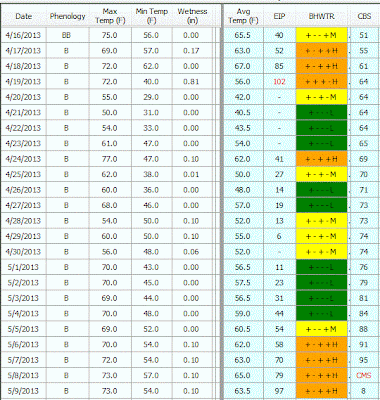
FIRE BLIGHT: Below is the updated graphic from the Maryblyt 7 program. Based on 9-day predicted temperatures and wetting, the risk column shows the fire blight infection risk history through Apr 30 and predicted risk through May 9. The next four days, May 1-4, illustrate that the EIP (epiphytic infection potential) can gradually increase although the average daily temperature is lower than the of 60°F required minumum for infection to occur. This is because the EIP is based on estimated degree hours that the temperature is above 65°F throughout the day. Based on predicted temperatures, the EIP will approach the required threshold of 100 later next week (97% on May 9). Most cultivars are still near full bloom and some susceptible bloom will likely be present and should be protected if those conditions occur. The CBS column at the right in the graphic indicates progression toward the appearance of canker blight symptoms on new growth, due to extension of overwintering cankers from last year, with canker margin symptoms (CMS) by May 8. Canker advancement will not be prevented by a chemical treatment and the presence of symptoms will indicate a build-up of inoculum which could become a factor in the event of a trauma blight situation due to hail injury, etc.
CAUTION: As usual, be aware that risks can change quickly with unpredicted warmer temperatures and wetting. In high-risk situations, a protective streptomycin application is recommended ahead of predicted infection. The weather conditions used in the predictive part of this graphic come from the Weather Channel for Winchester, supplemented by site-specific data from SkyBit Inc.

Subscribe to:
Posts (Atom)